An ultrafast fiber laser generates extremely short light pulses – typically in the femtosecond (10-15 seconds) or picosecond (10-12 seconds) range – using an optical fiber as the gain medium. It combines the benefits of ultrafast pulse generation with the robustness, efficiency, and compactness of fiber technology.
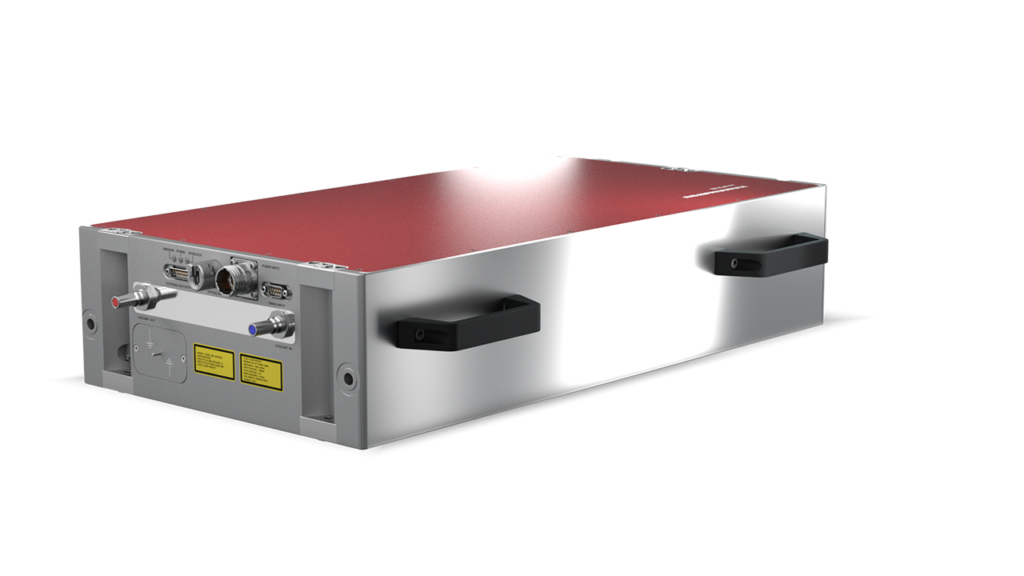
These lasers deliver high peak powers and excellent beam quality, often near the diffraction limit, with repetition rates from kHz to hundreds of MHz. Pulse generation is achieved via mode-locking, using techniques like saturable absorbers or nonlinear polarization evolution. The fiber not only boosts the light but also helps shape the pulses by managing dispersion and using nonlinear effects.
Fiber lasers are compact, alignment-free, and easy to integrate. Their stability and turnkey operation make them ideal for applications such as micromachining, multiphoton microscopy, ultrafast spectroscopy, and neuroscience.
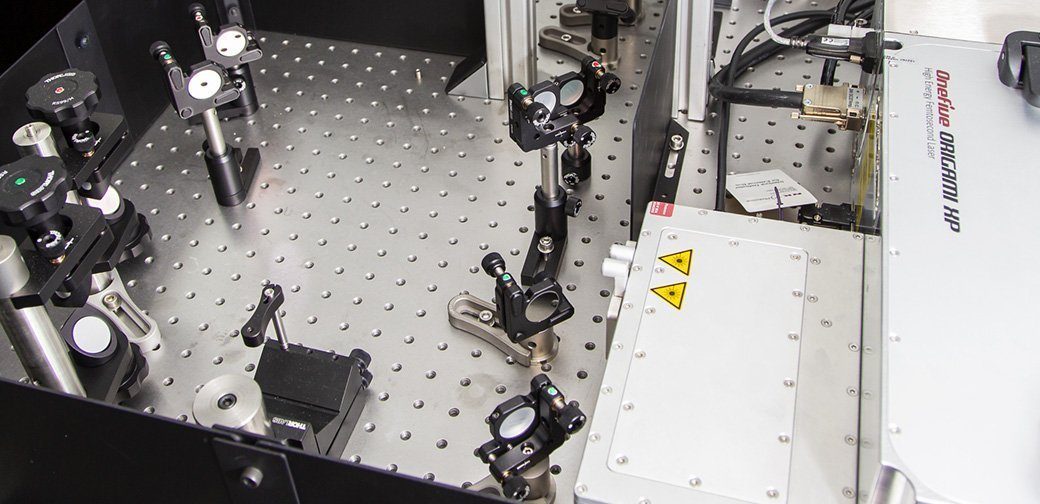
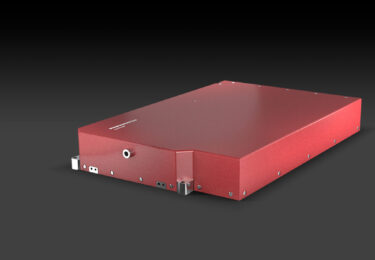
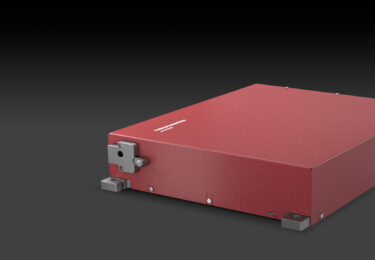
Our aeroPULSE fiber-based lasers are well-known for their robust performance with low maintenance. They offer cost-effective, long-term solutions in many applications. And our ORIGAMI solid-state lasers, known for their high pointing stability and pure pulse quality, ensure consistent results, essential in medical and industrial applications.
Erbium-doped and Frequency-doubled
Our ultrafast lasers are available at 1030 nm and as a frequency-doubled green version at 515 nm. The shorter wavelength allows for tighter focusing and better interaction with transparent and brittle materials.
At both wavelengths, the ultrafast pulse duration ensures minimal thermal damage, delivering high precision and repeatability. These lasers are excellent tools for processing transparent, opaque, and composite materials.
Applications Across Industries
Here are some of the most popular applications for ultrafast lasers operating at 1030 nm and 515 nm, along with explanations of why each wavelength is well-suited for these uses.
1030 nm lasers
- Two-photon optogenetics
The 1030 nm wavelength penetrates deep into biological tissues with minimal scattering, enabling precise neural stimulation via two-photon excitation. - Micromachining of metals and semiconductors
The 1030 nm wavelength is well-absorbed by metals and semiconductors, and the ultrafast pulses allow high-precision machining with minimal heat-affected zones. - Medical device fabrication
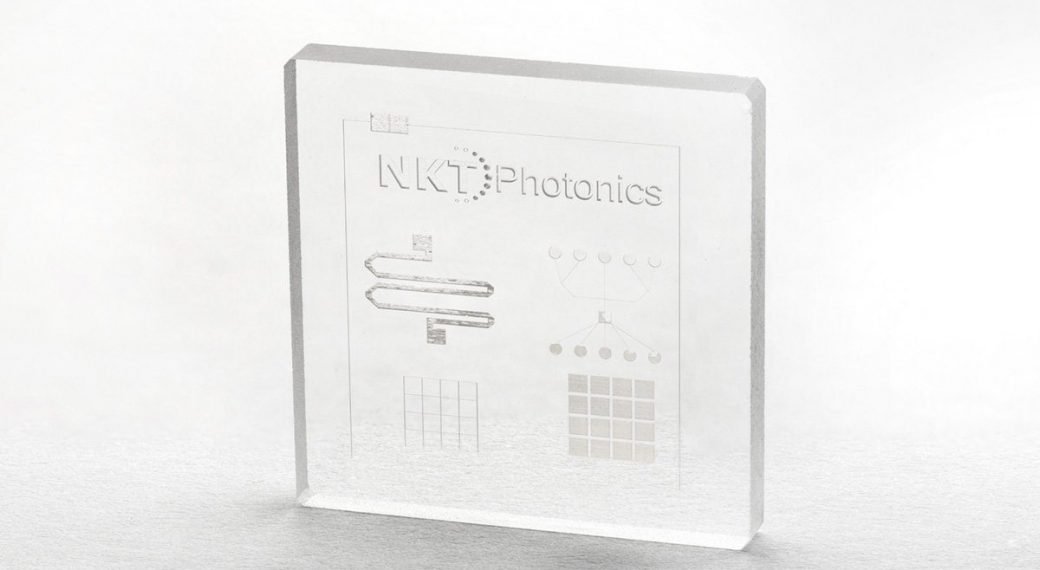
The combination of high pulse energy and precision makes 1030 nm lasers ideal for cutting, drilling, and structuring delicate components used in medical instruments and implants. - Waveguide writing in glass
Infrared light at 1030 nm penetrates deeply into glass, enabling precise 3D modification without surface damage. - Ultrafast spectroscopy and pump-probe experiments
The short pulses and high stability of 1030 nm lasers provide the temporal resolution and reliability needed for time-resolved measurements.
515 nm lasers
- Micromachining of transparent materials
The 515 nm wavelength is better absorbed in glass and sapphire than infrared, allowing clean cuts and holes in transparent substrates. - Display and OLED processing
Green ultrafast lasers enable high-resolution patterning and structuring of delicate display layers without damaging surrounding materials. - Thin-film ablation (e.g., ITO removal)
The shorter wavelength provides high absorption and better resolution, making it ideal for selective removal of thin conductive films on glass or plastic. - Solar cell structuring
515 nm ultrafast lasers allow precise scribing and contact formation with minimal thermal load, improving efficiency and yield in solar panel production. - Medical device micromachining on polymers
Green light interacts efficiently with polymers, enabling smooth, clean cuts in thin or flexible materials often used in medical applications.
Reliable Performance. Compact Design. Unmatched Stability.
Ultrafast fiber lasers are known for their high reliability, thanks to robust all-fiber or solid-state designs with minimal moving parts. Their stable performance and low maintenance requirements make them ideal for demanding industrial and scientific applications. Even in challenging environments, they deliver consistent results with long operational lifetimes.
ORIGAMI femtosecond lasers combine the laser head, controller, and cooling in a compact, all-in-one design. Our OptoCage™ technology ensures exceptional thermal and mechanical stability by housing optical components in a precision-machined, temperature-controlled aluminum block. This results in consistent femtosecond pulse generation and industry-leading pointing stability, even in changing environments.